Embarking on a business valuation can be a complex journey, fraught with potential miscommunications if not properly managed. For both business owners seeking an appraisal and valuation professionals providing the service, clarity is paramount from the outset. A well-defined scope of work sets clear expectations, outlines deliverables, and ensures all parties are aligned on the valuation’s purpose and methodology. This article will guide you through the essential elements and benefits of utilizing a robust business valuation scope of work template to streamline your next engagement.
Having a standardized approach not only saves time but also significantly reduces the risk of disputes or misunderstandings later in the process. It acts as a foundational agreement, detailing what will be done, by whom, and within what parameters. Understanding how to create and leverage an effective template is crucial for a successful and transparent valuation project. Here, we will explore the critical components and provide a clear framework for your own valuation engagements.
Understanding The Core Of Business Valuation Engagements
A comprehensive business valuation engagement letter or agreement is the cornerstone of any successful appraisal project. It serves as a roadmap, guiding the valuation analyst and the client through every stage of the process. Without a precise scope, projects can drift, leading to budget overruns, unmet expectations, and dissatisfaction for all involved.
Defining the project’s boundaries ensures that resources are allocated efficiently and that the final valuation report meets specific objectives. This initial agreement helps in avoiding scope creep, where additional services or requirements are added without proper adjustment to the timeline or fee. A solid business valuation scope of work template establishes these boundaries upfront, benefiting both the valuer and the client.
Why A Clear Scope Prevents Misunderstandings
Misunderstandings often arise when expectations are not explicitly stated and agreed upon. A detailed scope of work clearly delineates the services to be provided, the data required, and the expected outcomes. This transparency helps manage client expectations, ensuring they understand the limitations and assumptions inherent in any valuation.
For instance, a valuation for divorce proceedings will have different requirements and reporting standards than one for potential sale. Specifying these nuances in the scope prevents disagreements about the applicability or usefulness of the final report. Clear communication from the start fosters trust and a more productive working relationship.
Key Elements Defined By The Scope
The scope of work clarifies several critical aspects that influence the valuation process and its outcome. It specifies the standard of value (e.g., fair market value, investment value) and the premise of value (e.g., going concern, liquidation value), which are fundamental to the appraisal’s context. These choices significantly impact the resulting valuation figure.
Furthermore, it outlines the valuation date, the specific assets or entities being valued, and the methodologies likely to be employed. This proactive definition prevents situations where the client might expect a different approach or timeframe. By addressing these key elements upfront, the valuation engagement proceeds with greater clarity and fewer surprises.
Crafting Your Business Valuation Scope Of Work Template
Developing a standardized template for your business valuation services is an intelligent strategic move. It ensures consistency across all your engagements, speeds up the proposal process, and maintains a professional image. This template should be adaptable enough to suit various client needs while retaining core sections that are always relevant.
The template should detail not just the “what” but also the “how” and “when.” Including sections for data requirements, client responsibilities, and the estimated timeline helps to keep the project on track. According to industry statistics, firms utilizing standardized engagement agreements report significantly higher client satisfaction rates.
Essential Components Of An Effective Template
An effective business valuation scope of work template should include several fundamental sections. Begin with client and engagement details, clearly identifying all parties and the specific business entity being valued. Follow this with a precise statement of the valuation’s purpose, as this underpins the entire approach.
Next, detail the standard and premise of value that will be used, along with the valuation date. Crucially, outline the methodologies to be considered (e.g., income approach, asset approach, market approach) and the nature of the valuation report (e.g., detailed report, summary report, calculation report). Include sections for client responsibilities, data requirements, project timeline, and fee structure. Finally, specify any disclaimers or limiting conditions.
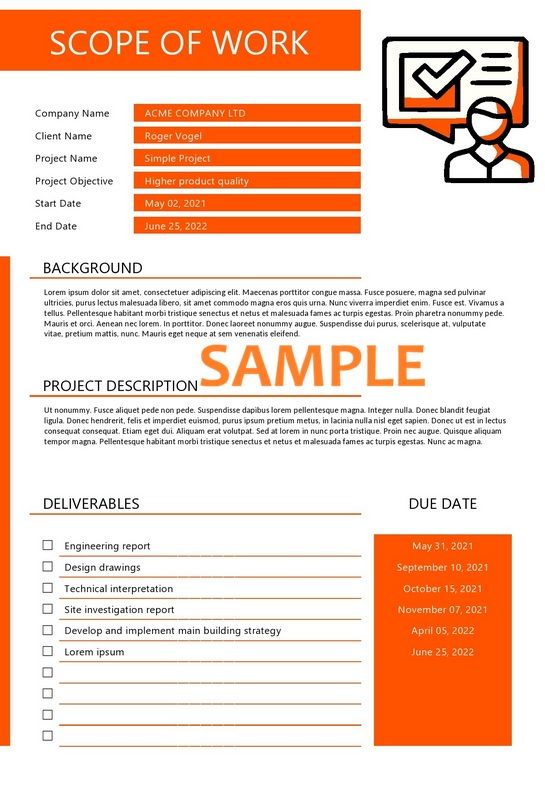
Sample Business Valuation Scope Of Work Template
Here is a comprehensive sample structure for a business valuation scope of work template, designed to be adaptable for various engagements.
BUSINESS VALUATION SCOPE OF WORK TEMPLATE

Date of Agreement: [Date]

1. Parties Involved:
   a.  Client: [Client Name, Address, Contact Person, Email, Phone]
   b.  Valuer: [Firm Name, Address, Contact Person, Email, Phone]

2. Engagement Overview:
   a.  Entity to be Valued: [Full Legal Name of Business, Entity Type (e.g., C-Corp, LLC)]
   b.  Valuation Date: [Specific Date for which the valuation opinion will apply]
   c.  Purpose of Valuation: [e.g., Sale of Business, Estate Planning, Divorce, Financial Reporting, Shareholder Buyout, Litigation Support]
   d.  Standard of Value: [e.g., Fair Market Value, Investment Value, Fair Value]
   e.  Premise of Value: [e.g., Going Concern, Liquidation Value, Orderly Liquidation]

3. Scope of Services:
   a.  Valuation Approach: The valuation will primarily consider the following generally accepted approaches, as deemed appropriate:
       i.   Income Approach (e.g., Discounted Cash Flow, Capitalization of Earnings)
       ii.  Market Approach (e.g., Guideline Public Company Method, Transaction Method)
       iii. Asset Approach (e.g., Adjusted Net Asset Method)
   b.  Level of Service/Type of Report: [e.g., Detailed Valuation Report (Comprehensive), Summary Valuation Report (Abbreviated), Calculation Report (Limited)]
   c.  Procedures to be Performed:
       i.   Review of historical financial statements (3-5 years)
       ii.  Analysis of projected financial information (if provided)
       iii. Interview with management regarding operations, strategy, and industry
       iv.  Research of industry and economic conditions
       v.   Identification and application of appropriate valuation methodologies
       vi.  Preparation of a written valuation report conforming to professional standards.

4. Client Responsibilities & Data Requirements:
   a.  Provide timely access to all requested financial and operational documentation, including but not limited to:
       i.   Historical financial statements (Income Statements, Balance Sheets, Statements of Cash Flow)
       ii.  Tax returns for the past [X] years
       iii. Budgets and financial projections (if available)
       iv.  Organizational documents (e.g., articles of incorporation, operating agreements)
       v.   List of significant assets and liabilities
       vi.  Material contracts, customer lists, and key employee details
   b.  Availability of management for interviews and clarification requests.
   c.  Notification of any significant changes in the business during the engagement period.

5. Project Timeline:
   a.  Data Collection & Initial Review: [e.g., 2-3 weeks from receipt of all requested documents]
   b.  Analysis & Draft Report: [e.g., 3-4 weeks thereafter]
   c.  Client Review & Feedback: [e.g., 1 week]
   d.  Final Report Delivery: [e.g., 1 week after client feedback and final payment]
   e.  Total Estimated Duration: [e.g., 8-10 weeks]

6. Fee Structure:
   a.  Total Fixed Fee: $[Amount]
   b.  Payment Schedule: [e.g., 50% upfront, 50% upon delivery of final report]
   c.  Expenses: [e.g., All-inclusive, or Reimbursable for travel/out-of-pocket expenses]
   d.  Additional Services: Any work beyond this scope will be subject to a separate engagement agreement or hourly billing at $[Rate] per hour.

7. Limiting Conditions & Disclaimers:
   a.  The valuation opinion is valid only for the stated purpose and as of the valuation date.
   b.  The valuer assumes no responsibility for the accuracy of information provided by the client.
   c.  The report is intended for the sole use of the client and may not be distributed or relied upon by third parties without explicit written consent.
   d.  The valuation is not an audit, and no assurance is provided regarding the accuracy of financial information.

8. Signatures:
   a.  Client: ____________________________ Date: ___________
   b.  Valuer: ____________________________ Date: ___________
Implementing a detailed business valuation scope of work template provides immense benefits for both the client and the valuation professional. It ensures a systematic approach, minimizes ambiguities, and fosters a clear understanding of the engagement from start to finish. By clearly outlining the purpose, methodology, deliverables, and responsibilities, you lay the groundwork for a successful and transparent valuation process.
Utilizing such a template not only enhances professionalism but also protects all parties involved by codifying the agreement in a clear, accessible format. Adopting this practice will significantly improve the efficiency and effectiveness of your business valuation projects.