Industrial motors are the workhorses of countless operations, from manufacturing plants to power generation facilities. Their consistent performance is vital for maintaining productivity and avoiding costly disruptions. When these essential components show signs of wear, a comprehensive overhaul becomes necessary to restore their efficiency and extend their lifespan.
However, a motor overhaul is not a simple task; it requires meticulous planning, precise execution, and thorough documentation. Without a clear roadmap, the process can become disorganized, leading to delays, budget overruns, and suboptimal results. This is where a robust motor overhauling scope of work template proves invaluable, providing a structured approach to ensure every step is accounted for.
This article will guide you through the critical components of such a template, explaining why each section is essential for a successful motor reconditioning project. We’ll delve into the planning, execution, and post-overhaul phases, ultimately presenting a sample template to help you streamline your maintenance operations.
Understanding the Importance of a Detailed Motor Overhaul Plan
A well-defined scope of work is the cornerstone of any successful motor maintenance project. It serves as a formal agreement and a detailed guide, outlining all tasks, responsibilities, and expected outcomes. This clarity helps prevent misunderstandings between asset owners and service providers.
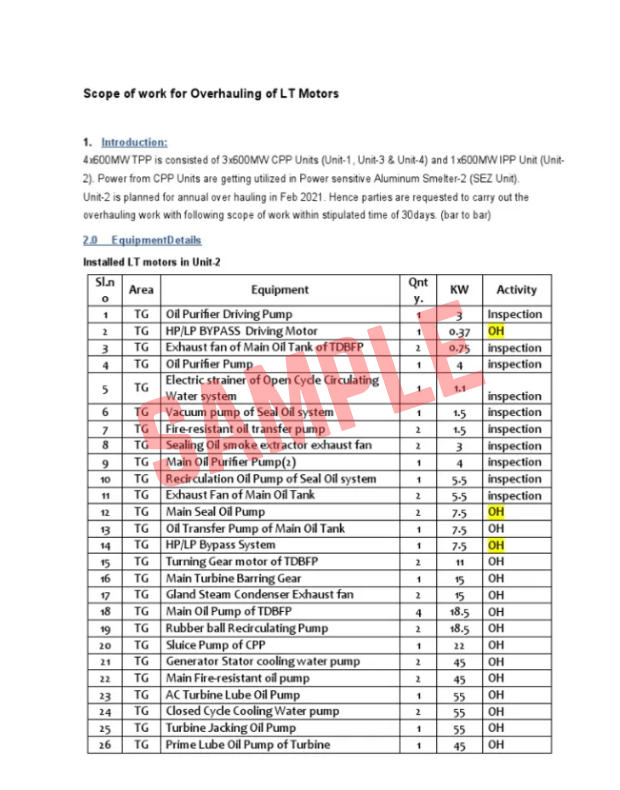
Moreover, a comprehensive plan ensures that all necessary steps are taken to bring the motor back to optimal performance. It minimizes the risk of overlooked issues that could lead to premature failure or require additional, unplanned work down the line. Such planning is crucial for protecting your valuable assets.
Minimizing Downtime and Costs with Strategic Planning
Unexpected equipment failures lead to costly downtime, impacting production schedules and profitability. A strategic motor overhaul plan, detailed in a robust scope of work, aims to prevent such surprises. It allows for proactive scheduling of maintenance during planned shutdowns, thereby reducing overall operational disruption.
Furthermore, a clear motor overhauling scope of work template helps in accurately estimating project costs. By detailing every task, required parts, and labor, businesses can secure competitive bids and avoid unforeseen expenses. This structured approach ensures budget adherence and maximizes return on investment for your maintenance spend. Industry data suggests that proper preventive maintenance can reduce unexpected breakdowns by up to 70%, significantly cutting associated costs.
Ensuring Quality, Performance, and Compliance in Motor Reconditioning
Quality assurance is paramount in motor overhauls. A detailed scope of work sets clear performance standards and quality control checkpoints throughout the process. This ensures that the motor meets or exceeds original equipment manufacturer (OEM) specifications after reconditioning.
Compliance with safety regulations and environmental standards is also critical. The template can specify adherence to relevant industry norms, protecting both personnel and the environment. By outlining specific testing procedures and documentation requirements, the scope of work guarantees that the overhauled motor operates reliably and safely for years to come.
Key Elements of an Effective Motor Overhauling Scope of Work Template
Creating an effective scope of work involves more than just listing tasks. It requires a systematic approach that covers the entire lifecycle of the overhaul, from initial assessment to final reporting. Each element plays a crucial role in the success of the project.
A robust template ensures that no critical steps are missed, providing a clear framework for all parties involved. It acts as a communication tool, a project management guide, and a record-keeping instrument. Let’s explore the key components that should be included.
Pre-Overhaul Assessment and Planning
The success of any motor overhaul begins long before the first wrench is turned. A thorough pre-overhaul assessment is essential for diagnosing existing issues, understanding the motor’s operational history, and planning the most effective repair strategy. This initial phase sets the stage for the entire project.
- Initial Site Inspection: Verify motor identification (serial number, model), assess immediate operational environment, and note any obvious external damage or conditions. This helps in understanding the context of the motor’s wear.
- Performance Data Collection: Gather baseline performance data such as vibration analysis, thermal imaging, current draw, and historical maintenance records. This data provides crucial insights into the motor’s health prior to disassembly.
- Risk Assessment and Safety Planning: Identify potential hazards associated with the motor’s removal, transport, and overhaul process. Develop safety protocols, including lockout/tagout procedures and personal protective equipment (PPE) requirements, to ensure a safe working environment.
- Detailed Project Planning: Define the project timeline, resource allocation (personnel, tools, specialized equipment), and material procurement plan. This includes identifying long-lead items or specialized parts that may be needed.
Execution Steps and Quality Control for Motor Overhauls
The execution phase is where the actual work of overhauling the motor takes place. This stage requires careful attention to detail and adherence to established procedures to ensure a high-quality outcome. Quality control measures are integrated throughout the process.
- Motor Disassembly: Systematically dismantle the motor, documenting each component’s condition, orientation, and placement. This photographic and written record is vital for correct reassembly and future reference.
- Cleaning and Inspection: Thoroughly clean all components to remove dirt, grease, and contaminants. Conduct detailed inspections, including visual checks, dimensional measurements, and specialized non-destructive testing (NDT) if required, to identify wear, cracks, or fatigue.
- Repair and Replacement: Perform necessary repairs on salvageable parts such as re-machining shafts, re-insulating windings, or balancing rotors. Replace worn-out components with new parts that meet or exceed OEM specifications.
- Reassembly and Alignment: Carefully reassemble the motor, ensuring all components are correctly installed and torqued to specifications. Perform precise alignment checks to minimize vibration and extend bearing life.
- Testing and Validation: Conduct a comprehensive suite of post-overhaul tests, including electrical tests (insulation resistance, surge, hipot), mechanical tests (vibration analysis, run-out), and performance tests (load testing if applicable). These tests validate the motor’s functionality.
Post-Overhaul Documentation and Reporting
The project doesn’t end when the motor is reassembled and tested. Comprehensive documentation and reporting are crucial for completing the overhaul process effectively. This step provides valuable insights for future maintenance.
Final reports detail all work performed, parts replaced, test results, and any recommendations for ongoing maintenance. This information is critical for tracking asset history and making informed decisions about future preventative measures. A well-maintained record can significantly enhance an asset’s lifespan.
- Final Overhaul Report: Compile a comprehensive report detailing all work performed, including before-and-after photos, parts replaced, measured parameters, and test results. This report serves as a permanent record of the overhaul.
- Warranty Information: Clearly state the warranty terms for the overhaul work and any replaced parts. This provides assurance regarding the quality of the service provided.
- Future Maintenance Recommendations: Provide recommendations for future preventative maintenance, including suggested inspection intervals, lubrication schedules, and monitoring techniques, to maximize the motor’s operational life.
Sample Motor Overhauling Scope of Work Template
A well-structured motor overhauling scope of work template provides a clear and organized framework for all parties involved. This sample illustrates the typical sections and details required to ensure a comprehensive and successful overhaul. This table format helps in clearly defining tasks, responsibilities, and expected outcomes.
The template should be adapted to the specific type of motor, its operational environment, and the complexity of the required overhaul. Each item within the table represents a critical step or deliverable, ensuring nothing is overlooked during the maintenance process. This systematic approach is key to achieving optimal results.
| Section | Item/Task Description | Deliverables / Expected Outcome | Responsibility |
|---|---|---|---|
| Project Overview | Project Title, Motor Identification (Tag No., Serial No., Make, Model, kW/HP), Project Location, Dates. | Project Name, Clear Motor ID, Scope Acknowledgment. | Client / Service Provider |
| Pre-Overhaul Phase | Receive motor at facility, initial visual inspection, performance data logging (vibration, current, temperature). | Initial inspection report, baseline performance data. | Service Provider |
| Disassembly & Inspection | Secure and safely position motor. | Motor safely positioned and secured. | Service Provider |
| Disconnect and remove external components (fan, shroud, terminal box). | External components removed and tagged. | Service Provider | |
| Complete motor disassembly (rotor, stator, bearings, endbells, shaft). | All components safely disassembled, photographed, and tagged. | Service Provider | |
| Thorough cleaning of all components (stator, rotor, shaft, bearings, housing). Detailed visual inspection for wear, damage, cracks, and corrosion. Dimensional checks on critical components (shaft run-out, bearing journals). | Component inspection report with photographs, dimensional data. | Service Provider | |
| Repair & Reconditioning | Stator Winding Assessment: Electrical testing (insulation resistance, surge, hipot). Cleaning and re-varnishing or full re-winding if necessary. | Stator test report, re-varnished or re-wound stator. | Service Provider |
| Rotor & Shaft Work: Clean and balance rotor. Repair or replace shaft as needed (e.g., re-machining bearing journals, replacing keyways). | Balanced rotor report, repaired/new shaft. | Service Provider | |
| Bearing Replacement: Install new bearings (matching OEM specifications), inspect bearing housings. | New bearings installed correctly. | Service Provider | |
| Mechanical Components: Inspect and repair/replace endbells, fan, fan shroud, terminal box, and seals. | All mechanical components in good condition. | Service Provider | |
| Reassembly & Testing | Motor Reassembly: Careful reassembly of all components to OEM specifications. | Fully reassembled motor. | Service Provider |
| Alignment & Balancing: Static and dynamic balancing of rotor. Final shaft alignment checks. | Balancing certificate, alignment report. | Service Provider | |
| Final Electrical & Mechanical Testing: Insulation resistance, surge, hipot, resistance, vibration analysis, no-load run test. | Final test report (electrical, mechanical, vibration). | Service Provider | |
| Documentation & Deliverables | Provide comprehensive overhaul report, including before/after photos, parts list, test data, and warranty information. | Complete overhaul report, warranty certificate. | Service Provider |
| Warranty | Specify warranty period for parts and labor. | Clearly stated warranty terms. | Service Provider |
Implementing a clear and detailed motor overhauling scope of work template is more than just a procedural step; it’s a strategic investment in the longevity and reliability of your industrial assets. By outlining every phase of the overhaul process, from initial assessment to final documentation, you ensure transparency, accountability, and the highest quality of work. This proactive approach not only minimizes unexpected breakdowns and associated costs but also enhances the overall operational efficiency of your machinery.
Utilize the comprehensive framework provided here to customize a template that perfectly fits your specific equipment and operational needs. A well-executed motor overhaul, guided by a precise scope of work, will significantly contribute to sustained productivity and peace of mind, ensuring your critical motors continue to power your success for years to come.