In any workplace or community setting, preparedness for medical emergencies is not just a recommendation; it’s a critical necessity. Unexpected incidents can occur at any moment, and having individuals trained in first aid can make a life-saving difference. To ensure such training is effective, comprehensive, and aligns with organizational goals, a structured approach is paramount.
This is where a robust first aid training scope of work template becomes an invaluable tool. It acts as a detailed blueprint, outlining every aspect of a first aid training program from initial planning to final certification. Such a template ensures clarity, consistency, and compliance, helping organizations deliver high-quality emergency response education.
Throughout this article, we will explore why a well-defined first aid training SOW is crucial, delve into its essential components, and provide a sample structure to help you develop your own tailored plan. Understanding these elements will empower you to implement effective, impactful first aid training initiatives.
Why a Defined First Aid Training Scope of Work is Crucial
A clear and comprehensive first aid training scope of work document serves as the foundation for any successful emergency response program. It eliminates ambiguity, sets clear expectations, and ensures that all stakeholders are aligned on the objectives and deliverables. Without such a framework, training efforts can become disjointed and less effective.
Ensuring Compliance and Safety Standards
Adhering to safety regulations is non-negotiable for most organizations. A well-crafted first aid training SOW helps ensure compliance with local, national, and industry-specific health and safety standards. This might include guidelines from bodies like OSHA in the United States or similar regulatory agencies globally.
The template specifies the type and level of training required for different roles or environments. It also helps document that employees receive appropriate certifications, meeting legal mandates for workplace safety. This proactive approach mitigates risks and helps avoid potential penalties.
Clarifying Expectations and Deliverables
A primary benefit of using a **first aid training scope of work template** is its ability to clearly define what will be taught and what outcomes are expected. It outlines the responsibilities of both the training provider and the participants. This clarity prevents misunderstandings and ensures that resources are utilized efficiently.
Key deliverables, such as the number of trained personnel, specific certifications earned, or the practical skills acquired, are explicitly stated. Everyone involved understands their role and what success looks like. This ensures the training meets the specific needs of the organization.
Optimizing Resource Allocation and Budgeting
Planning first aid training without a clear scope can lead to wasted resources. A detailed SOW allows organizations to accurately budget for instructors, materials, venue, and certification fees. It provides a precise overview of all costs involved.
By defining the scope upfront, organizations can avoid unnecessary expenses or last-minute additions. It ensures that the investment in first aid training yields maximum return in terms of prepared personnel and enhanced safety. This strategic planning supports both financial prudence and operational excellence.
Key Elements of an Effective First Aid Training Scope of Work Template
Developing a robust first aid training program requires careful consideration of several interconnected elements. Each section of your scope of work template should address specific aspects of the training, ensuring a holistic and effective approach. These elements collectively guide the implementation and evaluation of the training.
Defining Training Objectives and Target Audience
The first step in any SOW is to clearly state what the training aims to achieve. These objectives should be specific, measurable, achievable, relevant, and time-bound (SMART). For instance, an objective might be “to certify 75% of administrative staff in basic CPR and AED usage by Q3.”
Equally important is identifying the target audience. Not everyone needs the same level of first aid training. Different roles (e.g., office workers, field technicians, childcare providers) will have varied requirements. Tailoring the training to the audience’s specific risks and needs enhances its relevance and impact.
Course Content and Methodology
The core of any training SOW lies in the detailed description of the course content. This section outlines the specific topics that will be covered during the first aid training. It ensures that all necessary emergency skills are addressed.
Typically, this will include:
- Cardiopulmonary Resuscitation (CPR) techniques
- Automated External Defibrillator (AED) usage
- Wound care and bleeding control
- Choking relief for adults, children, and infants
- Recognition and response to sudden illnesses (e.g., heart attack, stroke, seizure)
- Management of fractures, sprains, and head injuries
- Emergency protocols and scene safety
The methodology details how the training will be delivered. This can include classroom lectures, hands-on practical sessions, online modules, simulations, or a blended approach. Effective training often combines theoretical knowledge with significant practical application.
Assessment, Certification, and Refresher Requirements
How will participant competency be evaluated? This section defines the assessment methods, which might include written exams, practical skill demonstrations, or a combination of both. Successful completion leads to certification.
Details about the type of certification (e.g., American Heart Association, Red Cross, local equivalent) and its validity period are crucial. Many first aid certifications require refreshers every one to three years. The SOW should clearly stipulate the requirements for ongoing training to maintain proficiency. This ensures that skills remain current and effective over time.
Sample First Aid Training Scope of Work Template
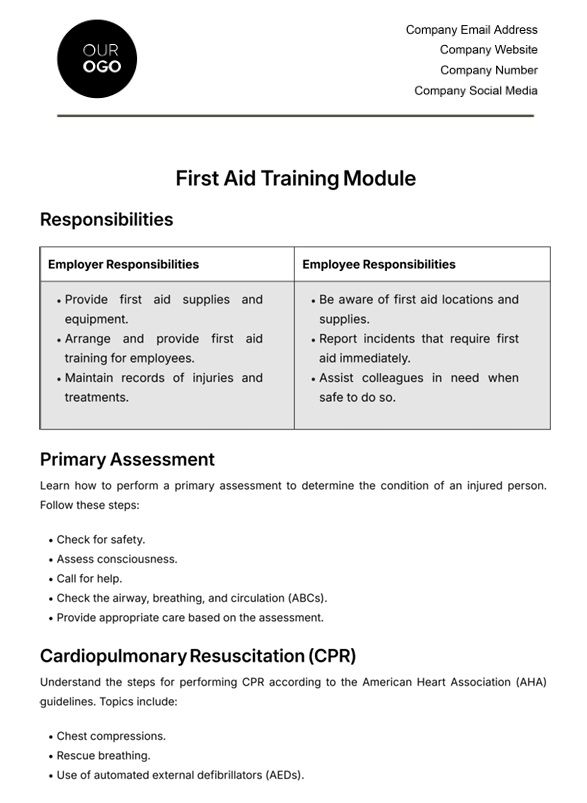
A structured **first aid training scope of work template** provides a clear framework for planning and executing effective emergency preparedness programs. This sample demonstrates the key sections and information typically included. It serves as a guide for organizations to customize their own SOW document.
Project Title: Comprehensive Workplace First Aid and CPR/AED Training Program
1. Introduction and Background
This document outlines the scope of work for implementing a comprehensive First Aid and CPR/AED training program for all employees at [Your Company Name]. The goal is to enhance workplace safety, meet regulatory compliance, and empower staff to respond effectively to medical emergencies.
2. Objectives
- To train 100% of designated staff in basic First Aid, CPR, and AED usage.
- To ensure compliance with [Relevant Regulatory Body, e.g., OSHA] standards for workplace first aid provision.
- To equip employees with the practical skills and confidence to provide immediate assistance in an emergency.
- To achieve official certification for all participants from a recognized authority.
3. Scope of Services / Deliverables
The training provider will deliver the following services and deliverables:
- Course Design: Provide a curriculum covering core first aid, CPR, and AED topics.
- Instruction: Conduct engaging, hands-on training sessions led by certified instructors.
- Materials: Supply all necessary training materials, including manuals, practice mannequins, and AED trainers.
- Assessment: Administer practical skill assessments and knowledge tests.
- Certification: Issue official certifications upon successful completion of the course.
- Reporting: Provide a summary report of attendance, performance, and certifications issued.
4. Target Audience
- All full-time employees (approx. [Number] staff members).
- Specific focus on employees in high-risk areas ([e.g., manufacturing floor, laboratory]).
- New hires will receive training as part of their onboarding process.
5. Training Content Overview
- Emergency Action Principles (Scene Safety, Calling for Help)
- Adult, Child, and Infant CPR Techniques
- Automated External Defibrillator (AED) Operation
- Management of Choking (Conscious and Unconscious)
- Control of Bleeding and Wound Care
- Shock Management
- Burns, Fractures, Sprains, and Strains
- Recognition of Medical Emergencies (Heart Attack, Stroke, Seizures, Diabetic Emergencies)
- Allergic Reactions and EpiPen Use
6. Training Methodology
- Blended learning approach: [e.g., 2 hours online pre-course material, 6 hours in-person practical session].
- Interactive lectures, video demonstrations, and scenario-based training.
- Extensive hands-on practice with manikins and training AEDs.
- Low instructor-to-student ratio for personalized feedback.
7. Schedule and Logistics
- Training Dates: [Specify dates or range, e.g., Q2 2024, every Tuesday in May].
- Duration: [e.g., 8 hours per session, split into two 4-hour sessions].
- Location: [Your Company Name] Conference Room / Off-site training facility.
- Maximum Participants per Session: [e.g., 12-15].
8. Roles and Responsibilities
- [Your Company Name]: Provide suitable training venue, coordinate employee schedules, ensure attendance.
- Training Provider: Deliver high-quality instruction, provide all equipment, issue certifications, provide post-training support.
9. Certification and Refresher Training
- Certification Type: [e.g., OSHA-compliant First Aid, CPR, and AED certification].
- Validity: 2 years from the date of issuance.
- Refresher Training: Mandatory refresher course every 2 years, as outlined in future SOWs.
10. Budget and Payment Terms
- Total Cost: [Specify total amount or per-person cost].
- Payment Schedule: [e.g., 50% upfront, 50% upon completion].
11. Point of Contact
- [Your Company Contact Person]
- [Training Provider Contact Person]
Implementing a well-structured plan for first aid education significantly elevates an organization’s emergency preparedness. By leveraging a comprehensive first aid training scope of work template, businesses can ensure their staff are not only compliant with safety regulations but also truly capable of responding effectively when it matters most. This proactive approach saves lives and fosters a safer environment for everyone.
Embrace the power of clear planning and detailed documentation in your safety initiatives. Utilize a customized first aid training SOW to guide your programs, making certain that every participant gains the essential skills needed to act confidently in an emergency. Begin crafting your own template today to build a resilient and prepared team.