Winter weather brings unique challenges for property managers, business owners, and homeowners associations alike. Ensuring clear, safe access despite heavy snowfall requires a reliable plan and, crucially, a crystal-clear agreement with your service provider. This is precisely where a well-defined snow removal scope of work template becomes indispensable.
A comprehensive snow removal scope of work template serves as the foundational document for any winter maintenance contract. It outlines all expectations, responsibilities, and performance standards between the client and the snow removal contractor. Without such a document, misunderstandings can quickly arise, leading to costly disputes or unsafe conditions during critical snow events.
This article will guide you through the essential elements of developing an effective snow removal scope of work template. We will explore key components, discuss best practices, and provide a detailed sample to help you create a bulletproof agreement. By understanding these principles, you can ensure smooth operations and maintain safe properties all winter long.
Crafting Effective Snow Removal Contracts
Developing a strong snow removal contract begins with clearly articulating the services required. Vague agreements often lead to dissatisfaction and additional costs down the line. A properly detailed scope of work minimizes ambiguity for both parties.
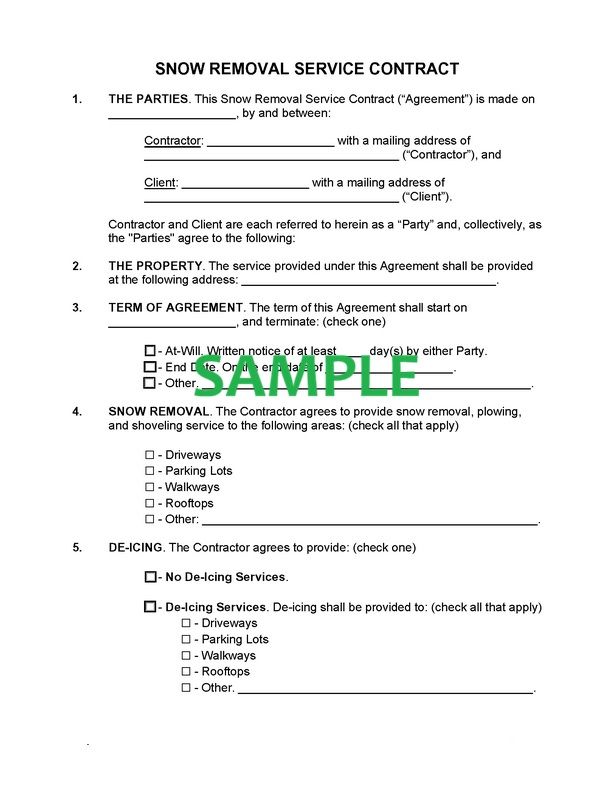
Defining these terms upfront protects both the property owner and the service provider. It sets realistic expectations for service delivery and helps avoid disputes. This attention to detail is paramount for successful winter operations.
Defining Service Areas and Triggers
The first step in any snow removal scope of work template is to precisely define the areas requiring service. This includes parking lots, walkways, entrances, loading docks, and any emergency access routes. A detailed site map, often attached as an appendix, can be incredibly helpful for visual clarity.
Equally important are the triggers that initiate snow removal services. Common triggers include a specified accumulation of snow, such as 1-2 inches, or the onset of freezing rain. Clearly outlining these thresholds ensures timely responses and avoids unnecessary service calls.
Consider different levels of service based on snow depth or ice conditions. For instance, a light dusting might only require salting walkways, while heavy snowfall demands full plowing of parking lots. These varying service levels should be explicitly detailed within your agreement.
Specifying Equipment and Methods
The types of equipment and methods used for snow removal significantly impact efficiency and cost. Your snow removal scope of work template should specify the machinery expected, such as plow trucks, skid steers, snow blowers, or shovels. This ensures the contractor has appropriate resources.
Detail the methods for snow displacement, whether it’s plowing snow to designated areas on-site or off-site removal. If de-icing services are included, specify the types of de-icing agents to be used, such as rock salt, liquid brine, or calcium chloride. Some properties have specific requirements for pet-friendly or environmentally safe products.
Confirm that the contractor has sufficient equipment and personnel to handle multiple snow events or large properties simultaneously. A reliable contractor should have backup equipment and a robust workforce plan. Approximately 80% of property managers report that contractor reliability during heavy snowfall is their top concern.
Understanding Liability and Insurance
Liability and insurance are critical components of any service agreement, especially for snow removal. The snow removal scope of work template must clearly outline who is responsible for damages to property or injuries sustained on the premises. This protection is vital for both parties.
The contractor should carry adequate general liability insurance, workers’ compensation insurance, and commercial auto insurance. Request copies of their certificates of insurance (COIs) to verify coverage. Ensure that your property is listed as an “additional insured” on their policy.
Clarify indemnification clauses, which state that the contractor will hold the property owner harmless for certain claims arising from the contractor’s negligence. Consulting with a legal professional to review these sections is always a wise decision. This helps protect against unforeseen legal challenges.
Essential Components of a Robust Snow Removal Scope of Work Template
A truly effective snow removal scope of work template goes beyond basic service definitions. It incorporates logistical, financial, and communication details that ensure smooth execution throughout the winter season. These additional layers of detail enhance clarity and prevent potential friction.
Careful consideration of these elements can significantly improve the overall success of your snow removal efforts. It transforms a simple agreement into a comprehensive operational guide. This proactive approach saves time and resources in the long run.
Service Schedule and Response Times
Clearly defining the service schedule and expected response times is paramount. For example, specify that plowing must commence within “X” hours after snow accumulation reaches the trigger depth. For businesses, access for opening hours is crucial.
Consider including provisions for continuous service during prolonged snow events. This means the contractor returns to clear snow periodically until the storm ends. Establish different response times for urgent areas like emergency exits versus less critical zones.
The agreement should also outline procedures for post-storm clean-up, such as widening cleared areas or addressing residual ice. Detailing these aspects ensures that the property remains safe and accessible long after the main snowfall has ceased. About 30% of slip-and-fall incidents occur after the main snowfall, due to refreezing or overlooked ice.
Pricing Models and Payment Terms
The financial terms are a cornerstone of the snow removal scope of work template. Multiple pricing models exist, including per-event, seasonal flat rate, or hourly rates. Each model has pros and cons depending on your property’s needs and typical winter conditions.
A per-event model charges for each time services are performed based on specific triggers or snow depth tiers. A seasonal flat rate covers all services for the entire winter, regardless of snowfall volume, offering budget predictability. Hourly rates are often used for manual labor or smaller, specialized tasks.
Clearly state payment terms, such as billing cycles (e.g., monthly, after each event) and due dates. Include provisions for fuel surcharges, material costs, or additional services like ice dam removal. Transparent pricing prevents surprises and fosters a good working relationship.
Communication Protocols and Reporting
Effective communication is vital during winter storms. Your template should specify how and when the client will be notified of service commencement, completion, or any delays. Establish designated contact persons for both the client and the contractor.
Outline the reporting requirements. This could include digital timestamps, photos of completed work, or even GPS tracking of equipment. Such documentation provides verification of services rendered and helps in resolving any discrepancies.
Detail the process for requesting additional services or addressing concerns. A clear chain of command ensures that issues are resolved quickly and efficiently. Regular communication fosters trust and ensures both parties are always on the same page.
Sample Snow Removal Scope of Work Template
Below is a sample structure for a comprehensive snow removal scope of work template. This outline provides a framework that you can adapt to your specific property and contractor needs, ensuring all critical aspects are covered for effective winter maintenance.
Agreement Overview
- Client: [Client Name, Address, Contact Person, Phone, Email]
- Contractor: [Contractor Company Name, Address, Contact Person, Phone, Email]
- Property Address: [Service Location Address]
- Contract Period: [Start Date] to [End Date] (e.g., October 15th – April 15th)
- Objective: To provide professional and timely snow and ice management services to ensure safe access and egress for occupants and visitors.
Service Triggers and Response Times
- Snowfall Trigger: Plowing to commence when snowfall accumulates to 1.5 inches.
- Ice Event Trigger: De-icing to commence immediately upon visible ice formation or freezing rain.
- Response Time:
- Plowing: Within 2 hours of trigger event, with completion within 4 hours for snowfall up to 6 inches. For snowfall exceeding 6 inches, continuous plowing until completion.
- De-icing: Within 1 hour of trigger event, with reapplication as needed.
- Walkways/Entrances: Must be clear and treated within 1 hour of property’s business opening time.
Defined Service Areas
- Parking Lots: All paved parking areas, including designated visitor and employee parking.
- Walkways: All pedestrian walkways, sidewalks, and designated pathways.
- Entrances: All building entrances, emergency exits, and handicap ramps.
- Loading Docks: Access routes and dock areas.
- Snow Stacking Zones: Designated areas [Specify locations on site map, e.g., “North corner of Lot B”]. No snow to be piled against buildings, fire hydrants, or storm drains.
Equipment and Methods
- Plowing: Use of plow trucks and skid steers for parking lots and main driveways.
- Walkway Clearing: Use of snow blowers and manual shoveling for all pedestrian areas.
- De-icing: Application of commercial-grade rock salt (sodium chloride) to parking lots and driveways. Application of calcium chloride pellets to all walkways and entrances.
- Off-Site Hauling: [Specify if included/excluded, and if included, cost per load or hourly rate].
Payment Terms and Pricing
- Pricing Model: Seasonal Flat Rate: $[Amount] for the entire contract period.
- Inclusions: All plowing, de-icing of specified areas, and walkway clearing as per triggers.
- Exclusions/Additional Charges:
- Snow hauling off-site (if not included in flat rate): $[Amount] per load or $[Hourly Rate].
- Ice dam removal: $[Hourly Rate].
- Excessive de-icing (beyond standard applications): Will be billed at cost + 15%.
- Invoicing: Monthly invoices issued on the 1st of each month, due net 15 days.
- Late Payment: Interest of 1.5% per month on overdue balances.
Insurance and Liability
- Contractor Insurance: Contractor shall maintain General Liability ($2,000,000), Workers’ Compensation, and Commercial Auto ($1,000,000) insurance.
- Additional Insured: [Client Name] shall be named as an additional insured on Contractor’s General Liability policy. Proof of insurance must be provided annually.
- Indemnification: Contractor agrees to indemnify and hold harmless Client from any claims, damages, or liabilities arising from Contractor’s negligence or willful misconduct.
Communication and Reporting
- Primary Client Contact: [Client Contact Person, Phone, Email]
- Primary Contractor Contact: [Contractor Contact Person, Phone, Email]
- Service Notification: Contractor to notify Client via email upon commencement and completion of services for each event.
- Documentation: Contractor to provide time-stamped photos of services rendered upon request.
Termination Clause
- Either party may terminate this agreement with [Number] days written notice.
- Breach of contract may result in immediate termination.
Having a detailed snow removal scope of work template like this ensures both parties are aligned. It clearly communicates expectations for service delivery and helps manage potential issues proactively. This level of detail reduces miscommunication and promotes a harmonious working relationship.
Effectively managing winter weather risks is crucial for property safety and operational continuity. By utilizing a robust snow removal scope of work template, you establish clear expectations and safeguard your interests from the outset. This foundational document streamlines communication, defines responsibilities, and helps prevent costly disputes or hazardous conditions during the snowy months.
Investing time in creating a comprehensive scope of work ensures that your property remains safe and accessible, regardless of what winter brings. Be sure to review and customize every section to fit your unique needs, fostering a strong and transparent partnership with your snow removal service provider.