Protecting our planet and adhering to environmental regulations are more crucial than ever for businesses and organizations alike. A well-defined environmental monitoring program is the backbone of responsible operations, ensuring compliance, mitigating risks, and promoting sustainability. Without a clear plan, efforts can become scattered, inefficient, and potentially non-compliant.
This is precisely where an effective environmental monitoring scope of work template becomes invaluable. It serves as a foundational document, outlining every aspect of an environmental project, from objectives and methodologies to reporting requirements. Understanding how to create and utilize such a template is essential for any stakeholder involved in environmental management.
In this comprehensive guide, we will explore the critical elements of environmental monitoring, delve into why a robust scope of work is necessary, and provide a detailed sample environmental monitoring scope of work template to help you streamline your projects. You’ll learn how to develop a framework that not only meets regulatory demands but also fosters environmental stewardship.
Why A Structured Environmental Monitoring Plan Is Crucial
Implementing an environmental monitoring plan without a clear scope of work can lead to significant challenges, including cost overruns, missed deadlines, and regulatory penalties. A structured approach ensures all parties understand their roles, responsibilities, and the expected outcomes of the monitoring activities. This proactive planning minimizes ambiguities and maximizes efficiency.
Ensuring Regulatory Compliance And Risk Mitigation
One of the primary drivers for environmental monitoring is compliance with local, national, and international environmental laws. An explicit scope of work details the specific regulations that need to be addressed, guiding the monitoring activities to meet legal requirements. It acts as a preventative measure, helping to identify potential issues before they escalate into costly violations. Studies show that effective environmental monitoring programs can reduce compliance risks by up to 30% by proactively addressing concerns.
Furthermore, a well-structured plan helps in identifying and mitigating environmental risks associated with operations. This includes assessing potential impacts on air, water, soil, and biodiversity. By having a clear outline, organizations can detect anomalies early, respond promptly, and prevent adverse effects, protecting both the environment and their reputation.
Optimizing Resource Allocation And Project Efficiency
An environmental monitoring scope of work template provides a roadmap, clearly defining the resources needed for a project. This includes personnel, equipment, laboratory analysis, and budget allocations. By specifying these details upfront, organizations can avoid wasteful spending and ensure that resources are deployed effectively where they are most needed. Over 70% of environmental project delays stem from inadequate planning and resource misallocation.
Moreover, a comprehensive scope of work enhances overall project efficiency. It sets realistic timelines, assigns responsibilities, and establishes clear communication channels. This structured approach ensures that monitoring activities are conducted systematically, data is collected accurately, and results are reported in a timely manner, keeping the project on track and within budget.
Key Components Of An Effective Environmental Monitoring Scope Of Work
Creating a robust environmental monitoring scope of work template involves detailing several essential sections. Each component plays a vital role in ensuring the clarity, effectiveness, and successful execution of the monitoring program. These sections transform a basic idea into an actionable plan.
Defining Project Objectives And Parameters
Every environmental monitoring project must begin with clearly articulated objectives. These objectives should be SMART: Specific, Measurable, Achievable, Relevant, and Time-bound. For instance, an objective might be “to assess groundwater quality for heavy metal contamination over a six-month period to comply with EPA standards.” The scope of work will detail what needs to be monitored and why.
Equally important is defining the specific parameters that will be monitored. This could include water pH, dissolved oxygen, turbidity, chemical concentrations, air particulate matter, noise levels, or biodiversity metrics. The chosen parameters must directly relate to the project objectives and regulatory requirements, ensuring that all efforts are focused and meaningful.
Methodology For Data Collection And Analysis
The methodology section outlines the “how” of the monitoring project. It specifies the techniques, equipment, and protocols to be used for data collection. This might involve setting up continuous monitoring stations, conducting periodic grab sampling, using remote sensing technologies, or performing biological surveys. Clear, standardized procedures are crucial for data integrity.
- Sampling Locations: Detail where samples will be collected (e.g., specific wells, air quality stations, soil grids).
- Sampling Frequency: Specify how often samples will be taken (e.g., weekly, monthly, quarterly).
- Equipment: List all necessary monitoring devices, their calibration, and maintenance schedules.
- Analytical Methods: Describe the laboratory analysis techniques, including accreditation standards (e.g., EPA methods).
- Quality Assurance/Quality Control (QA/QC): Outline procedures to ensure data accuracy and reliability, such as duplicate samples and blanks.
Reporting And Data Management Protocols
Effective environmental monitoring culminates in clear, concise reporting and robust data management. The scope of work must define the format, frequency, and recipients of all project reports. This includes initial baseline reports, ongoing progress reports, and a final comprehensive analysis. Reports often need to be submitted to regulatory bodies, internal stakeholders, and sometimes the public.
Data management protocols specify how collected data will be stored, processed, and analyzed. This could involve using specialized environmental data management software, databases, or geographical information systems (GIS). A well-defined system ensures data security, accessibility, and the ability to track trends over time, providing valuable insights for future decision-making and continuous improvement.
Sample Environmental Monitoring Scope Of Work Template
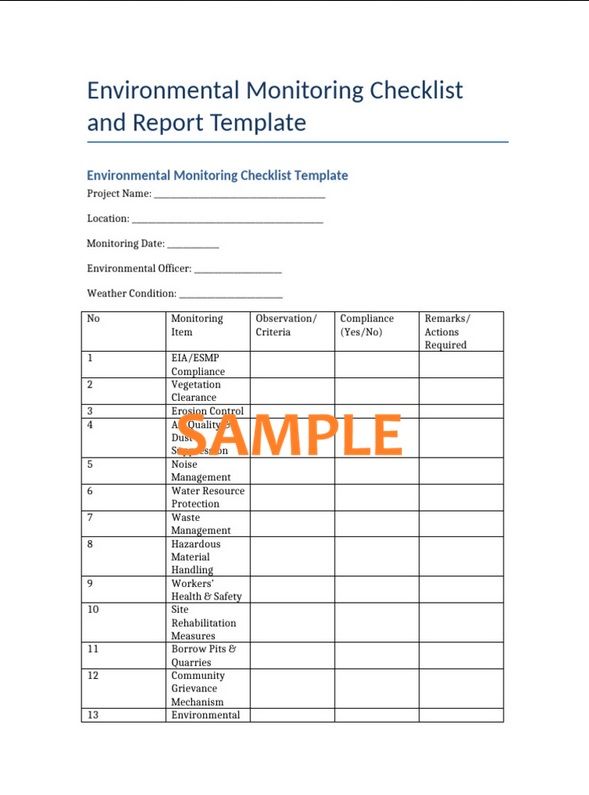
Below is an example of an environmental monitoring scope of work template. This structure can be adapted for various projects, from industrial site assessments to natural resource management. It provides a clear framework for defining project expectations.
Project Title: [Insert Project Name, e.g., Industrial Wastewater Discharge Monitoring Program]
Date: [Date of Document Creation/Revision]
Client: [Client Name]
Contractor: [Contractor/Consultant Name]
Project Manager: [Name and Contact Information]
1. Introduction and Background
This Scope of Work (SOW) outlines the requirements for an environmental monitoring program at [Site Name/Location]. The program aims to [State overall goal, e.g., ensure compliance with local wastewater discharge permits and assess potential impacts on the receiving water body]. This monitoring is necessary due to [Briefly explain background, e.g., regulatory requirements from Permit No. XXX and ongoing operational activities].
2. Project Objectives
The primary objectives of this environmental monitoring program are to:
- Verify compliance with permit limits for [list key parameters, e.g., pH, BOD, TSS, heavy metals] in wastewater discharges.
- Collect baseline and ongoing data to assess the long-term trends of environmental quality in [receiving water body].
- Identify any potential adverse impacts of industrial operations on the local environment.
- Provide data for regulatory reporting and internal environmental performance reviews.
3. Scope of Services / Monitoring Activities
The Contractor shall perform the following environmental monitoring activities:
3.1. Water Quality Monitoring
- Sampling Locations: Upstream of discharge point (Control), Discharge Point, Downstream of discharge point (Impact). [Specify exact GPS coordinates if possible].
- Sampling Frequency: Bi-weekly for 6 months, then monthly thereafter.
- Parameters to be Analyzed: pH, Temperature, Dissolved Oxygen, Total Suspended Solids (TSS), Biochemical Oxygen Demand (BOD5), Chemical Oxygen Demand (COD), Ammonia, Nitrates, Phosphates, Lead, Mercury, Cadmium, Chromium.
- Methodology: Grab samples collected in accordance with EPA Method [specific method number]. Samples to be preserved and transported to an accredited laboratory within holding times.
3.2. Sediment Quality Monitoring
- Sampling Locations: Co-located with downstream water quality points.
- Sampling Frequency: Quarterly.
- Parameters to be Analyzed: Grain size distribution, Total Organic Carbon, Lead, Mercury, Cadmium, Chromium, PCBs.
- Methodology: Sediment cores collected using a [type of sampler] according to ASTM DXXXX.
3.3. Data Management and Analysis
- Maintain a secure database of all collected monitoring data.
- Perform statistical analysis of trends, comparisons to baseline data, and against regulatory limits.
- Conduct quality assurance/quality control (QA/QC) checks on all collected data and laboratory results.
4. Deliverables
The Contractor shall submit the following deliverables:
- Monthly Progress Reports: Detailed summary of activities, sampling events, preliminary findings, and any deviations.
- Quarterly Compliance Reports: Comprehensive data analysis, trend assessment, compliance status, and recommendations.
- Annual Environmental Monitoring Report: Consolidated report summarizing all data, findings, compliance status, and long-term recommendations.
- All raw data in a specified digital format (e.g., Excel, CSV).
5. Project Schedule
The project is anticipated to commence on [Start Date] and conclude on [End Date]. A detailed Gantt chart or project timeline will be provided upon project initiation.
6. Health and Safety Requirements
All field activities shall be conducted in accordance with the Contractor’s Health and Safety Plan (HASP) and all relevant occupational health and safety regulations.
7. Roles and Responsibilities
- Client: Provide site access, relevant permits, and timely review of deliverables.
- Contractor: Execute all monitoring activities, data analysis, and reporting as per this SOW.
8. Budget and Payment Terms
[Refer to attached Budget Proposal/Contract for detailed cost breakdown and payment schedule].
9. Signatures
By signing below, both parties agree to the terms and conditions outlined in this Environmental Monitoring Scope of Work Template.
_________________________
Client Representative
_________________________
Contractor Representative
Developing a robust environmental monitoring program is a continuous journey that requires careful planning and execution. The use of a comprehensive environmental monitoring scope of work template provides the clarity and structure needed to navigate complex environmental regulations and achieve sustainability goals. It acts as a critical communication tool, ensuring all stakeholders are aligned from the project’s inception.
By implementing the principles and utilizing the framework discussed in this article, organizations can significantly improve their environmental performance, reduce potential liabilities, and foster a culture of environmental responsibility. Take the next step in enhancing your environmental management strategies by adopting a standardized approach to your monitoring projects.