Starting a new kitchen or bathroom renovation can be an exciting journey, transforming your living space. However, these complex projects often come with potential pitfalls, including misunderstandings, budget overruns, and frustrating delays. Such issues are especially common in detailed tasks like cabinet installations, where precise coordination is crucial.
The good news is that many of these problems can be avoided with proper planning and clear communication. A well-defined scope of work (SOW) document acts as your shield against these common construction challenges. It meticulously outlines every detail and expectation from the project’s inception to its completion.
This article will explore why a robust cabinet installation scope of work template is an indispensable tool for contractors and clients alike. We will guide you through its essential components and provide a comprehensive sample to help you create a document that not only protects all parties involved but also ensures the smooth and successful completion of your cabinetry project.
Understanding The Importance Of A Clear Cabinet Installation Scope Of Work
A clear and comprehensive scope of work document serves as the foundation for any successful construction or renovation project. It minimizes ambiguity and significantly reduces the potential for disputes, protecting both the contractor and the client. Without one, even minor details can lead to major headaches down the line.
Studies in project management consistently show that poor scope definition is a leading cause of project failure and cost overruns. In fact, many projects experience some form of “scope creep,” where uncontrolled changes or additions occur after the initial agreement. A detailed SOW document is your first line of defense against this common issue.
Defining Project Boundaries And Preventing Scope Creep
Scope creep refers to the uncontrolled growth in a project’s scope after it has already begun, often without proper documentation or corresponding adjustments in budget and timeline. It can quickly derail a project, leading to increased costs and missed deadlines. A well-crafted SOW explicitly defines what is included in the project and, just as importantly, what is excluded.
By clearly delineating the boundaries, a cabinet installation scope of work template acts as a legally binding document. It specifies every task, material, and service covered by the agreement. For instance, it might clarify whether cabinet assembly is part of the installation process or if it’s a separate pre-installation task, preventing assumptions that can lead to disputes.
Setting Clear Expectations For Clients And Installers
Miscommunication is a frequent source of conflict in any project. A detailed SOW ensures that everyone involved has a shared understanding of the project’s deliverables and requirements. Clients gain a clear picture of what will be installed, when it will happen, and the expected finished appearance.
For installers, the SOW provides specific guidance on tasks, quality standards, and materials to be used. This eliminates guesswork and ensures that the work performed aligns with the client’s vision and the contractor’s commitments. When expectations are aligned, the likelihood of misunderstandings and disagreements significantly decreases, fostering a more collaborative environment.
Ensuring Accurate Bidding And Project Timelines
Accuracy in project estimation is paramount for both contractors and clients. A precise cabinet installation SOW allows contractors to prepare detailed and accurate bids by clearly itemizing all required labor, materials, and specialized equipment. This level of detail minimizes the risk of underbidding, which can lead to financial losses, or overbidding, which can result in losing the job.
Similarly, a well-defined SOW enables the creation of realistic project timelines. By breaking down the installation process into distinct, measurable tasks, contractors can schedule work efficiently and communicate anticipated completion dates to clients with confidence. This transparency helps manage client expectations effectively and contributes to overall project profitability.
Key Components Of An Effective Cabinet Installation Scope Of Work Template
An effective scope of work template is far more than a simple checklist; it’s a comprehensive blueprint for project success and collaboration. It needs to be clear, exhaustive, and legally sound, covering every aspect from initial contact to project completion. A robust SOW ensures all parties are on the same page from the outset.
A well-structured template provides a framework that can be easily customized for individual projects, ensuring consistency and professionalism. It helps contractors standardize their proposals and gives clients peace of mind knowing all details are accounted for. This standardized approach is crucial for complex installations.
Project Overview And Contact Information
Every SOW should begin with a concise project overview and essential contact details for all parties involved. This section typically includes the official project name, the specific installation location, and complete contact information for both the client and the contractor. Providing clear contact details ensures open lines of communication throughout the project.
It also often outlines the overall objective of the project, such as “Installation of new kitchen cabinetry,” along with the agreed-upon start and estimated completion dates. This high-level summary sets the stage and provides immediate context for the entire document, making it clear what the project entails at a glance.
Detailed Work Specifications And Responsibilities
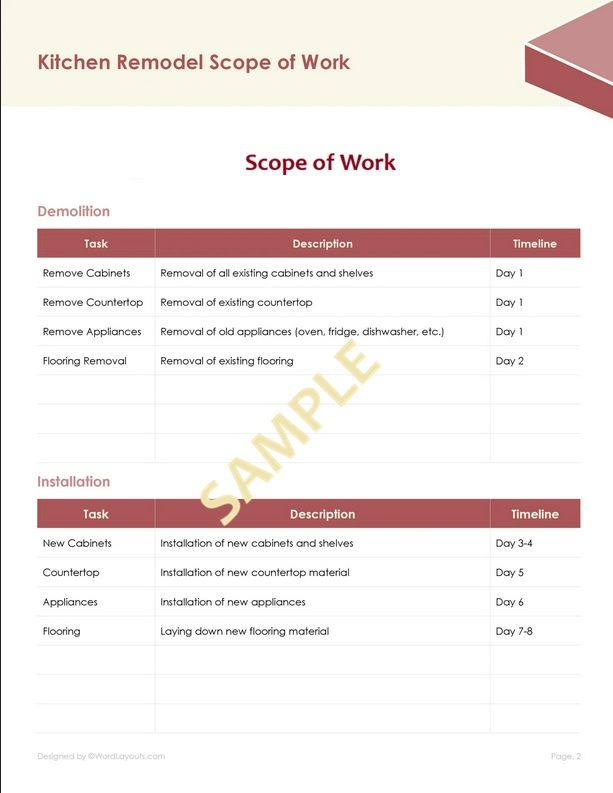
This section forms the core of the SOW, outlining every task to be performed in meticulous detail. It breaks down the entire cabinet installation process into individual, manageable steps. This might include demolition of existing cabinets, precise measuring and layout, cabinet assembly (if applicable), secure mounting of upper and lower cabinets, and the installation of hardware and trim.
Crucially, this part of the document also clarifies who is responsible for each specific task. For example, it will specify if the client is providing the cabinets and hardware, while the contractor is solely responsible for their installation. This level of detail prevents any ambiguity regarding division of labor and expectations.
Materials, Tools, And Site Preparation
A comprehensive SOW must address all aspects related to materials, tools, and site readiness. It specifies who is responsible for supplying the cabinets, hardware (such as pulls and knobs), filler strips, shims, and screws. Any quality standards for these materials should also be noted to avoid surprises.
The document should also list any specialized tools or equipment the contractor will use, ensuring transparency. Furthermore, it details the necessary site preparation requirements before installation can begin. This could include ensuring the work area is clear, free of debris, and that adequate floor protection is in place. Access to utilities like water and electricity is also often stipulated here.
Sample Cabinet Installation Scope Of Work Template
Utilizing a well-structured **cabinet installation scope of work template** like the one below can significantly streamline your projects. This sample illustrates the depth and detail required to minimize misunderstandings and ensure a successful outcome for all involved parties. Feel free to adapt this framework to suit your specific project needs.
Project Information
Project Title: [Client Name] Kitchen Cabinet Installation
Project Location: [Client Address]
Client Contact: [Client Name], [Client Phone Number], [Client Email Address]
Contractor Contact: [Company Name], [Contact Person], [Contractor Phone Number], [Contractor Email Address]
Project Start Date: [Date]
Estimated Completion Date: [Date]
1. Project Overview
- Installation of all pre-assembled or flat-pack kitchen cabinets (uppers, lowers, pantry, island base) as per the approved design plans provided by [Designer/Client Name].
- This scope specifically covers the labor for cabinet installation and associated minor fastening materials (screws, shims).
2. Inclusions (Contractor Responsibilities)
- Site Preparation:
- Verification of wall plumbness and levelness prior to commencing installation.
- Protection of existing flooring and countertops (if applicable) within the work zone.
- Cabinet Installation:
- Precise measurement and marking for cabinet placement according to the approved design.
- Secure mounting and leveling of all wall cabinets.
- Secure installation, leveling, and shimming of all base cabinets to ensure plumb and true alignment.
- Installation of cabinet doors, drawers, and interior accessories (e.g., lazy susans, pull-outs) supplied by the client.
- Drilling for door and drawer pulls/knobs (hardware to be supplied by the client).
- Installation of all decorative trim pieces (crown molding, light rail, toe kicks, fillers) supplied by the client.
- Scribing and fitting of filler strips where necessary to achieve a seamless appearance.
- Minor adjustments to ensure proper door and drawer alignment and function.
- Basic cleanup of the immediate work area, removing installation debris.
3. Exclusions (Not Included in This Scope)
- Demolition or removal of existing cabinets, countertops, or any other structures.
- Removal or disposal of old appliances, plumbing fixtures, or flooring.
- All electrical or plumbing rough-in or finish work.
- Painting, staining, or any finishing work on cabinets or trim pieces.
- Grout, caulking, or sealing services beyond what is strictly necessary for cabinet installation.
- Supply of cabinets, hardware (pulls/knobs), or decorative trim components.
- Countertop template creation, fabrication, or installation.
- Appliance installation (e.g., refrigerator, oven, dishwasher, microwave, range hood).
- Drywall repair, plastering, or any structural modifications to walls or flooring.
- Disposal of client-provided packaging materials for cabinets.
4. Client Responsibilities
- Ensure the work area is clear, clean, and accessible prior to the project start date.
- Provide all cabinets, hardware, and decorative trim pieces on-site by [Specific Date] and ensure they are free from defects.
- Approve final design plans and all material selections before installation commences.
- Ensure all necessary plumbing and electrical rough-ins are completed and inspected as required.
- Provide access to water and electricity during installation hours.
5. Payment Schedule
- 50% deposit upon signing of this agreement.
- 25% upon completion of all base cabinet installation.
- 25% upon final completion of all cabinet installation, trim work, and final adjustments.
6. Warranty
- [Contractor Company Name] provides a 1-year warranty on workmanship for the cabinet installation services performed, effective from the project completion date.
This detailed cabinet installation scope of work template ensures that all parties understand the precise deliverables, responsibilities, and expectations for the project. Both client and contractor should review and sign this document before any work begins.
A robust scope of work document is an invaluable asset for any cabinet installation project. It serves as a comprehensive guide, minimizing misunderstandings and ensuring that every step, from initial setup to final adjustments, is clearly defined. By outlining responsibilities, materials, and processes upfront, it fosters a smoother workflow and greater satisfaction for both the client and the installer.
Embracing the use of a detailed cabinet installation scope of work template protects your interests, promotes transparent communication, and ultimately leads to more successful project outcomes. Don’t embark on your next cabinetry project without one; it’s the foundation for efficiency, accuracy, and peace of mind.