Transforming an unfinished or underutilized basement into a functional, inviting living space is a fantastic way to add value and enjoyment to your home. Whether you dream of a cozy family room, a productive home office, or a luxurious guest suite, the journey from concept to completion can be complex. Without a clear roadmap, even the most exciting renovation projects can quickly become overwhelming, leading to unexpected costs, delays, and frustrations. This is precisely why having a well-defined basement remodeling scope of work template is not just helpful, but essential.
A comprehensive scope of work document acts as the foundational blueprint for your entire project. It details every aspect of the renovation, from initial demolition to the final coat of paint, ensuring that both you and your contractor are perfectly aligned on expectations. It helps clarify what work will be done, by whom, using what materials, and within what timeframe and budget.
Throughout this article, we will explore why a detailed scope of work is indispensable for your basement transformation. We’ll delve into the critical components you must include and provide a sample basement remodeling scope of work template to guide you in creating your own. Preparing this document diligently will set the stage for a smooth, successful, and stress-free basement renovation.
Why A Detailed Basement Remodeling Scope Of Work Template Is Crucial
Undertaking a significant home improvement project like a basement renovation requires meticulous planning. A well-crafted scope of work serves as your ultimate project guide, offering benefits that extend far beyond simple organization. It lays the groundwork for a successful partnership between you and your contractor, minimizing potential pitfalls and maximizing efficiency.
Setting Clear Expectations and Preventing Misunderstandings
One of the most significant advantages of a detailed scope of work is its ability to create absolute clarity for all parties involved. This document precisely defines what work is included and, equally important, what is excluded from the project. It outlines the responsibilities of both the homeowner and the contractor.
By clearly listing every task, material, and finish, a scope of work helps prevent disputes and ensures everyone is on the same page. Without this document, differing interpretations of verbal agreements can easily lead to conflicts and dissatisfaction. Research suggests that a high percentage of homeowner-contractor disagreements stem from unclear or unwritten project specifications.
Ensuring Budget Control and Preventing Cost Overruns
A robust scope of work is your best defense against unexpected expenses and budget blowouts. It itemizes all anticipated costs, providing a transparent breakdown of labor, materials, and any other associated fees. This level of detail makes it easier to track expenditures and identify potential financial discrepancies early on.
This transparency empowers you to make informed decisions and keeps the project within your financial parameters. Experts often note that unforeseen costs can inflate project budgets by 10-15% or more when a clear scope of work is absent. Having a detailed plan helps you avoid those costly surprises.
Streamlining the Project Timeline and Workflow
Every successful renovation project adheres to a carefully planned sequence of events. A comprehensive scope of work outlines this workflow, detailing the phases of the project, their dependencies, and estimated completion times. It acts as a project schedule, guiding the progression of tasks from start to finish.
Understanding this timeline helps you anticipate each step, from rough-ins for plumbing and electrical to drywall installation and final painting. A clear workflow minimizes delays by ensuring that materials are ordered on time and tradespeople are scheduled efficiently. This systematic approach contributes significantly to a smoother and faster project completion.
Essential Components Of Your Basement Remodel Project Plan
Creating an effective **basement remodeling scope of work template** involves more than just listing tasks. It requires a systematic approach to detail every aspect of the project, leaving no room for ambiguity. This comprehensive document should cover all the practical and financial specifics to ensure a successful outcome.
Project Overview and Goals
Begin your scope of work with a clear, concise overview of the project. This section should briefly describe the purpose of the basement renovation and your ultimate vision for the transformed space. Include essential contact information for both the homeowner and the contractor, along with the project’s physical address.
Articulate the primary goals for the basement, whether it’s creating a new living area, adding bedrooms, installing a home theater, or developing an accessory dwelling unit. Having these goals explicitly stated helps maintain focus throughout the project. It ensures that every decision aligns with the desired functionality and aesthetic.
Detailed Work Specifications
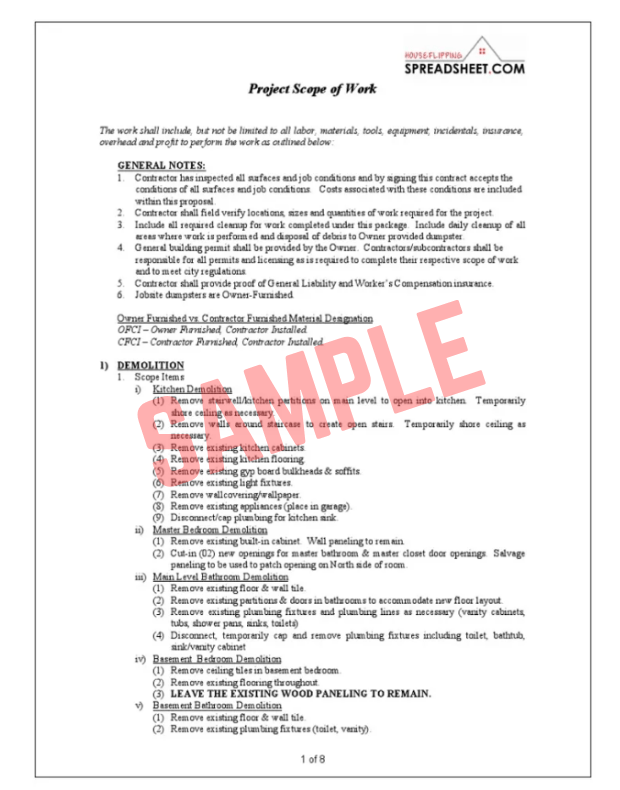
This is the core of your scope of work, listing every task that needs to be performed. Be as specific as possible, breaking down larger categories into individual actionable items. This section will dictate the labor and skills required for the project.
Key areas to cover include:
- Demolition: Specify what existing structures, walls, or finishes will be removed.
- Framing: Detail new wall layouts, bulkheads, closets, or special architectural features.
- Plumbing: Outline new water supply lines, drain lines, fixtures (toilet, sink, shower), and any appliance hookups.
- Electrical: Specify new outlets, switches, light fixtures, dedicated circuits, and any required panel upgrades.
- HVAC: Describe modifications to existing ductwork, new registers, or the installation of supplemental heating/cooling systems.
- Insulation: Detail the type and R-value for walls, ceiling, and any soundproofing needs.
- Drywall: Specify installation, taping, mudding, sanding, and the level of finish.
- Flooring: State the type of flooring (e.g., LVP, carpet, tile), underlayment, and specific areas for installation.
- Painting: Include details on primer, number of coats, specific colors for walls, ceiling, and trim.
- Trim & Doors: Specify baseboards, crown molding, door casings, and the type/style of interior doors.
- Special Features: Describe built-in shelving, cabinetry, wet bar installations, or fireplace additions.
- Cleanup: Define daily site cleanup and final debris removal.
Materials, Allowances, and Finishes
This section clarifies the quality and type of materials to be used, which directly impacts the project’s cost and final appearance. For items where exact selections are still pending, use “allowances.” An allowance is a designated budget amount for specific categories like light fixtures, bathroom vanities, or flooring.
Ensure that brands, models, or specific finish types are clearly listed when known. For example, specify “Luxury Vinyl Plank flooring, XYZ Brand, Oak series” instead of just “new flooring.” Clearly state whether materials will be supplied by the contractor or homeowner.
Payment Schedule and Change Order Process
Detailing the financial aspects and procedures for modifications is critical. The payment schedule should outline the total project cost and how payments will be structured, often tied to project milestones (e.g., 25% upon contract signing, 25% upon rough-in completion, 25% upon drywall completion, 25% upon final walkthrough).
Equally important is defining the change order process. This procedure dictates how any modifications to the original scope will be handled, including documentation, approval, and cost adjustments. A clear change order process prevents misunderstandings and financial disputes should the project’s direction need to shift.
Project Timeline and Milestones
Provide an estimated start and completion date for the entire project. Break down the project into key milestones, assigning target dates for their completion. This helps both parties monitor progress and manage expectations. Key milestones might include rough-in inspections, drywall installation, flooring completion, and final inspection. Be sure to note that timelines are estimates and can be affected by unforeseen circumstances like material delays or weather.
Sample Basement Remodeling Scope Of Work Template
Understanding the components is one thing; seeing how they come together in a structured document is another. Below is a simplified sample **basement remodeling scope of work template** to illustrate the format and level of detail you should aim for. This example is for transforming an unfinished basement into a living area with a full bathroom.
Project Title: Basement Finish & Bathroom Addition
Project Location: [Homeowner’s Full Address]
Homeowner Information:
- Name: [Homeowner’s Name]
- Phone: [Homeowner’s Phone Number]
- Email: [Homeowner’s Email Address]
Contractor Information:
- Company Name: [Contractor’s Company Name]
- Contact Person: [Contractor’s Name]
- Phone: [Contractor’s Phone Number]
- Email: [Contractor’s Email Address]
Date of Agreement: [Date]
Project Overview: Convert approximately 750 sq ft of unfinished basement space into a finished living area, including one (1) new full bathroom, one (1) large open recreation/family room, and one (1) storage closet. The goal is to create a comfortable, functional living space with modern finishes.
Detailed Work Items:
- Demolition:
- Remove existing partition wall near furnace (approx. 8 linear feet).
- Remove any miscellaneous debris and old shelving units.
- Haul away all demolition debris from site.
- Framing:
- Construct new framing for one (1) 5’x8′ bathroom.
- Frame one (1) 3’x3′ storage closet.
- Frame necessary bulkheads to conceal ductwork and plumbing lines.
- Install pressure-treated bottom plates where required.
- Rough-in Plumbing:
- Install new drain lines for toilet, vanity sink, and shower in bathroom.
- Run hot and cold water supply lines to all new fixtures.
- Install vent lines as per local code.
- Stub-out for future wet bar (optional, specify if included or excluded).
- Rough-in Electrical:
- Install new 15-amp circuits for general lighting and outlets in living area (6 outlets, 8 recessed lights).
- Install new 20-amp circuit for bathroom GFCI outlets (2 outlets).
- Install one (1) exhaust fan in bathroom, vented to exterior.
- Install wiring for one (1) switch for each lighting zone.
- Install one (1) smoke detector and one (1) carbon monoxide detector.
- HVAC:
- Extend existing supply and return ductwork to new finished areas.
- Install three (3) new supply registers and two (2) new return air vents.
- Insulation:
- Insulate exterior basement walls with R-13 fiberglass batts.
- Insulate bathroom walls for soundproofing (R-11).
- Install Roxul Safe’n’Sound insulation in ceiling below master bedroom for sound dampening.
- Drywall:
- Install 5/8″ drywall on all new walls and ceilings.
- Finish drywall to Level 4 smooth finish.
- Flooring:
- Install vinyl plank flooring (LVP) throughout main living area and storage closet.
- Install ceramic tile flooring in bathroom (30 sq ft).
- Painting:
- Apply one (1) coat of primer and two (2) coats of interior latex paint to all new walls (color TBD by homeowner).
- Apply one (1) coat of primer and two (2) coats of ceiling paint (white) to all new ceilings.
- Paint all new trim.
- Trim & Doors:
- Install 3 1/4″ baseboards and 2 1/4″ door casings throughout.
- Install one (1) pre-hung 30″ interior door for bathroom.
- Install one (1) bi-fold door for storage closet.
- Finishing Fixtures:
- Install two (2) recessed LED lights in bathroom.
- Install one (1) vanity light fixture.
- Install new toilet, vanity with sink, and shower/tub unit (specific models TBD by homeowner).
- Install all electrical cover plates.
- Cleanup:
- Daily site cleanup and broom-swept condition.
- Final professional cleaning upon completion.
Materials & Finishes (Selections/Allowances):
- Bathroom Fixtures:
- Toilet: Allowance $200 (Homeowner selection)
- Vanity & Sink: Allowance $400 (Homeowner selection)
- Shower/Tub Unit: Allowance $600 (Homeowner selection)
- Tile: Bathroom floor tile, 12″x24″ porcelain (Homeowner selection, up to $3.00/sq ft)
- LVP Flooring: XYZ Brand, “Rustic Oak” color (Contractor sourced, specified)
- Paint Colors: Walls – Sherwin Williams “Agreeable Gray”; Trim – Sherwin Williams “Pure White”
- Doors: Hollow core, smooth finish, pre-primed (Contractor supplied)
Project Timeline:
- Start Date: [Date]
- Framing Completion: [Date]
- Rough-in Inspections: [Date]
- Drywall Completion: [Date]
- Painting & Flooring: [Date]
- Fixture Installation: [Date]
- Final Walkthrough & Punchlist: [Date]
- Estimated Completion Date: [Date] (Contingent on material availability and timely homeowner selections)
Payment Schedule:
- 25% upon contract signing: $[Amount]
- 25% upon rough-in inspection approval: $[Amount]
- 25% upon drywall completion: $[Amount]
- 25% upon final walk-through and punchlist completion: $[Amount]
Change Order Procedure: Any modifications or additions to this scope of work must be submitted in writing, detailing the proposed change, its impact on cost, and the project timeline. Both homeowner and contractor must sign off on the change order before any related work begins.
Exclusions:
- Any landscaping work outside the foundation.
- Moving existing furniture or personal belongings from the basement (must be cleared by homeowner prior to start).
- Installation of home theater equipment or smart home devices.
Signatures: ______________________________ (Homeowner Signature) Date: __________ ______________________________ (Contractor Signature) Date: __________
Creating this detailed basement remodeling scope of work template provides an invaluable framework for your project. It acts as a shield against misunderstandings, a tool for financial control, and a guide for a smooth execution. By taking the time to outline every detail, you empower yourself and your contractor to work collaboratively towards a shared vision. This comprehensive document is your key to transforming your basement into a space that perfectly meets your needs and desires, with peace of mind every step of the way. Embrace the power of planning; your future finished basement will thank you for it.