Embarking on any video production project, whether it’s a corporate explainer, a vibrant commercial, or an engaging documentary, requires meticulous planning and clear communication. Without a solid framework, projects can quickly derail, leading to budget overruns, missed deadlines, and strained client relationships. This is precisely where a robust video production scope of work template becomes an indispensable tool for every production company and freelancer.
A well-defined scope of work (SOW) acts as the foundational agreement between you and your client. It outlines every detail, from creative vision to delivery specifics, ensuring both parties are aligned and understand their responsibilities. This article will delve into the critical elements of an effective SOW, explain its importance, and provide a comprehensive understanding of what to include when crafting your own video production scope of work template. By the end, you’ll have a clear roadmap to create agreements that foster successful project execution and client satisfaction.
Why A Robust Video Production Scope Of Work Is Essential
A thorough video production scope of work serves as the backbone of any successful project, preventing potential headaches down the line. It’s more than just a formality; it’s a strategic document that safeguards against misunderstandings and sets clear expectations. Neglecting this crucial step can lead to significant issues, impacting both your reputation and profitability.
Preventing Misunderstandings And Scope Creep
One of the most common challenges in video production is “scope creep,” where project requirements expand beyond the initial agreement without corresponding adjustments in budget or timeline. A detailed SOW clearly defines what is and isn’t included, minimizing ambiguity. This clarity protects both the client from unexpected costs and the production team from doing uncompensated work. It acts as a reference point for all discussions.
Managing Client Expectations Effectively
Clients often have a vision, but they might not understand the technical complexities or limitations involved in bringing that vision to life. A comprehensive SOW bridges this gap by outlining deliverables, timelines, and revision processes in an understandable manner. By setting realistic expectations upfront, you avoid disappointment and foster a stronger, more trusting client relationship. A clear agreement ensures everyone is on the same page regarding the final product.
Streamlining Project Workflow And Accountability
An effective video production scope of work template breaks down the project into manageable phases, assigning clear responsibilities and deadlines. This structured approach streamlines the workflow, making it easier for the production team to stay organized and on track. It also holds both the production company and the client accountable for their respective commitments, fostering a collaborative and efficient environment. Studies show projects with clear SOWs are significantly more likely to succeed within budget and on schedule.
Key Components Of An Effective Video Production SOW
To ensure your video production scope of work template is truly comprehensive, it must cover several critical areas. Each section plays a vital role in defining the project, managing expectations, and protecting all parties involved. A well-structured SOW leaves no room for guesswork and becomes a valuable reference document throughout the project lifecycle.
Project Overview And Objectives
This section sets the stage, providing a high-level summary of the video project. It should clearly state the client’s goals for the video, its target audience, and the primary message to be conveyed. Defining the “why” and “who” helps guide all subsequent creative and technical decisions. A concise project overview ensures everyone understands the ultimate purpose of the video.
Deliverables And Milestones
Here, you list every tangible item the client will receive, from raw footage and edited video files to specific aspect ratios and file formats. It’s also crucial to outline key project milestones, such as concept approval, shoot dates, first edit review, and final delivery. Specifying these details prevents assumptions about what will be delivered and when. Bullet points are especially helpful here for clarity.
- Final Edited Video (e.g., 60-second version, 30-second version)
- Specific Aspect Ratios (e.g., 16:9 for YouTube, 9:16 for Instagram Stories)
- Output File Formats (e.g., .MP4, .MOV, ProRes 422)
- Raw Footage (if agreed upon)
- Music Licensing Documentation
- Graphic Elements (e.g., lower thirds, animated logos)
Budget And Payment Terms
Transparency around finances is paramount. This section details the total project cost, a breakdown of expenses (e.g., pre-production, production, post-production, talent, equipment rentals), and the payment schedule. Specify due dates for deposits, progress payments, and final balances. Include terms for late payments and any potential additional costs for out-of-scope requests.
Revision Process And Legalities
Clarifying the revision policy prevents endless rounds of changes. Specify the number of included revision cycles for each phase (e.g., two rounds for rough cut, one for final polish). Also, detail ownership of intellectual property, usage rights for the final video, and any necessary indemnification clauses. This part of the SOW protects both parties legally and creatively.
Sample Video Production Scope Of Work Template
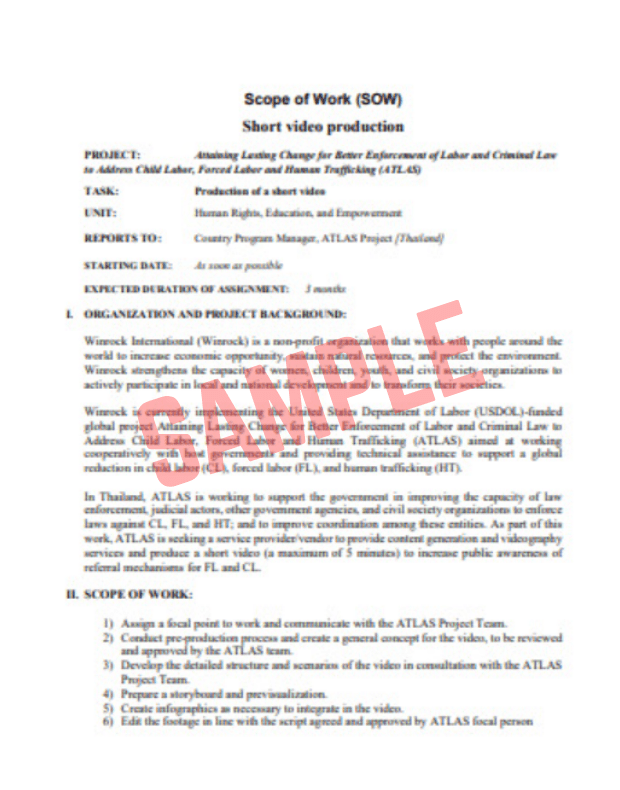
Below is a simplified, yet effective, example of a video production scope of work template. This format provides a clear structure, ensuring all essential details are covered for your next project. Remember to customize it heavily for each unique client and project.
Project Name: [Client Company Name] – [Video Title/Purpose]
Date: [Date]
Client: [Client Company Name] Client Contact: [Contact Person Name], [Email], [Phone Number]
Production Company: [Your Company Name] Production Contact: [Your Name], [Email], [Phone Number]
1. Project Overview & Objectives:
- Video Type: [e.g., 2-minute Brand Story Video]
- Purpose: To [e.g., introduce new product line, increase brand awareness, explain service offering].
- Target Audience: [e.g., B2B clients in tech sector, young adults aged 18-25].
- Key Message: [e.g., “Our service simplifies complex data analysis.”]
- Desired Tone: [e.g., Professional, innovative, approachable].
2. Scope of Work & Deliverables:
- Pre-Production Phase:
- Initial Concept Development & Scriptwriting (2 rounds of revisions)
- Storyboarding / Shot List Creation
- Location Scouting & Permitting (up to 2 locations)
- Talent Casting (up to 2 actors/presenters)
- Production Schedule & Logistics Planning
- Production Phase (Shoot Days):
- [Number] x Full-Day Shoot(s) (approx. 8-10 hours/day)
- Professional Camera & Lighting Equipment
- Audio Recording Equipment (boom, lavalier mics)
- Director, Cinematographer, Sound Recordist
- Basic Prop & Set Dressing (as per script)
- Post-Production Phase:
- Video Editing (including color grading, audio mixing)
- Motion Graphics & Visual Effects (as per script, e.g., animated lower thirds, logo animation)
- Licensed Stock Music (up to 2 tracks)
- Voiceover Recording (if applicable, 1 talent)
- First Draft Delivery: [Date]
- Revision Cycles: Two (2) rounds of revisions included for the rough cut, one (1) final revision for polish.
- Final Deliverables:
- One (1) x 90-second final video (1920×1080, MP4, H.264)
- One (1) x 30-second cutdown for social media (1080×1080, MP4, H.264)
- Final video delivered via [e.g., Google Drive, Vimeo Link]
- Project archive of final files available for 3 months post-delivery.
3. Timeline:
- Project Start Date: [Date]
- Concept & Script Approval: [Date]
- Shoot Dates: [Specific Dates or Week of]
- First Draft Delivery: [Date]
- Final Delivery: [Date]
4. Budget & Payment Terms:
- Total Project Fee: $[X,XXX.XX]
- Payment Schedule:
- 50% Deposit upon SOW/Contract Signing: $[X,XXX.XX]
- 30% Upon Completion of Production Phase: $[X,XXX.XX]
- 20% Upon Final Delivery: $[X,XXX.XX]
- Payment Method: [e.g., Bank Transfer, Check]
- Late Payment Fee: 5% per month on outstanding balance.
5. Terms & Conditions:
- Out-of-Scope Work: Any work requested outside of this SOW will be quoted separately and billed at an hourly rate of $[XX]/hour or as an agreed-upon change order.
- Revisions: Additional revisions beyond the agreed-upon number will be billed at $[XX]/hour.
- Intellectual Property: Client retains full usage rights for the final delivered videos. Production company retains ownership of raw footage unless otherwise agreed and compensated.
- Cancellation Policy: [e.g., If cancelled within 7 days of shoot, 50% of production fee is due.]
- Force Majeure: Neither party shall be liable for any failure to perform due to circumstances beyond their reasonable control.
Client Acceptance:
[Client Contact Name], [Title] [Client Company Name] Date:
Production Company Acceptance:
[Your Name], [Your Title] [Your Company Name] Date:
A well-executed video production scope of work template is not just a document; it’s a critical communication tool that fosters clarity, accountability, and ultimately, successful project outcomes. By carefully outlining every aspect from concept to completion, you establish a strong foundation for a productive client relationship and a streamlined production process. Investing time in crafting a detailed SOW upfront will save countless hours, prevent potential conflicts, and ensure your creative vision aligns perfectly with client expectations, leading to videos that truly hit their mark. Always adapt this template to fit the unique demands of each project.