Embarking on any civil engineering project, regardless of its scale, demands meticulous planning and crystal-clear communication. The intricate nature of infrastructure development, from bridges to wastewater treatment plants, means that even a minor misunderstanding can lead to significant delays and budget overruns. This complexity underscores the critical need for a foundational document that outlines every facet of the work.
A well-crafted civil engineering scope of work template serves as this essential blueprint. It defines the project’s boundaries, deliverables, timelines, and responsibilities, ensuring that all parties involved are perfectly aligned. Without such a document, projects can quickly drift off course, inviting disputes and compromising quality.
This article will delve into the profound importance of a structured scope of work, explore its core components, and provide a practical sample of a civil engineering scope of work template. By understanding and utilizing such a template, you can enhance project clarity, mitigate risks, and set the stage for successful project delivery.
The Importance of a Well-Defined Project Scope in Civil Engineering
Civil engineering projects are inherently complex, often involving multiple stakeholders, extensive regulatory compliance, and substantial financial investment. A precisely defined project scope acts as a compass, guiding all efforts and decisions throughout the project lifecycle. It transforms abstract ideas into concrete actions, leaving no room for ambiguity.
Mitigating Project Risks and Delays
Unclear project scopes are a primary culprit behind common project pitfalls, including cost overruns and schedule delays. When the boundaries of work are vague, tasks can be duplicated, overlooked, or misinterpreted, leading to rework and wasted resources. Research often shows that poorly defined project requirements contribute to a significant percentage of project failures.
A comprehensive civil engineering scope of work template helps to identify potential risks early on. It clarifies what is included and, equally important, what is excluded from the project. This foresight allows teams to proactively plan for challenges, allocate appropriate contingencies, and maintain project momentum without unexpected interruptions.
Ensuring Clear Client and Stakeholder Expectations
Effective communication is the bedrock of any successful civil engineering venture. A detailed scope of work provides a single source of truth for all involved parties, from clients and contractors to regulatory bodies and community members. It formally documents the project’s goals, objectives, and anticipated outcomes.
By clearly articulating expectations regarding deliverables, quality standards, and performance metrics, a well-defined scope minimizes misunderstandings. This shared understanding fosters trust and collaboration, preventing disputes that can arise from differing interpretations of the project’s requirements. It ensures everyone is working towards the same vision.
Streamlining Resource Allocation and Project Management
Efficient project management hinges on the optimal allocation of resources. This includes personnel, equipment, materials, and budgetary funds. Without a clear understanding of the project’s scope, resource planning becomes an exercise in guesswork, often leading to either under-utilization or over-commitment.
A robust civil engineering scope of work template breaks down the project into manageable phases and tasks. This detailed breakdown enables project managers to accurately estimate resource needs for each stage. It supports the creation of realistic schedules, facilitates effective budget control, and ultimately enhances overall project efficiency and profitability.
Key Elements of an Effective Civil Engineering Scope of Work Template
Creating an effective scope of work involves more than just listing tasks; it requires a structured approach to capture all critical project information. Each section plays a vital role in providing clarity and guiding the project to its successful conclusion. A well-designed civil engineering scope of work template incorporates several essential components to ensure thoroughness.
Defining Project Objectives and Deliverables
At the heart of any scope of work are the project’s overarching objectives and its specific deliverables. The objectives articulate the “why” behind the project, detailing the problems it aims to solve or the needs it seeks to address. These should be SMART: Specific, Measurable, Achievable, Relevant, and Time-bound.
Deliverables, on the other hand, specify the “what” – the tangible outputs or services that will be produced as a result of the project. These can include design drawings, feasibility reports, construction plans, permits, completed infrastructure components, or final inspection reports. Clearly listing each deliverable helps everyone understand the expected outcomes.
Establishing Project Phasing and Milestones
Large civil engineering projects are often best managed by breaking them down into distinct phases. These phases could include initiation, planning, design, procurement, construction, testing, and closeout. Defining these phases within the scope provides a logical progression for the work.
Within each phase, critical milestones serve as checkpoints to track progress and ensure the project remains on schedule. Milestones are significant points in the project lifecycle, such as the completion of preliminary design, securing all necessary permits, or the structural completion of a key component. They offer a clear timeline and allow for performance monitoring.
Identifying Roles, Responsibilities, and Reporting Structure
A clear understanding of who is responsible for what is paramount for smooth project execution. The scope of work should explicitly define the roles of all key personnel and organizations involved, from the client and primary contractor to sub-consultants and regulatory agencies. This includes detailing their specific responsibilities.
Furthermore, outlining the reporting structure clarifies lines of communication and authority. It specifies how progress will be reported, who will receive updates, and the procedures for issue resolution and change management. This structured approach to accountability minimizes confusion and promotes efficient decision-making throughout the project.
Sample Civil Engineering Scope Of Work Template
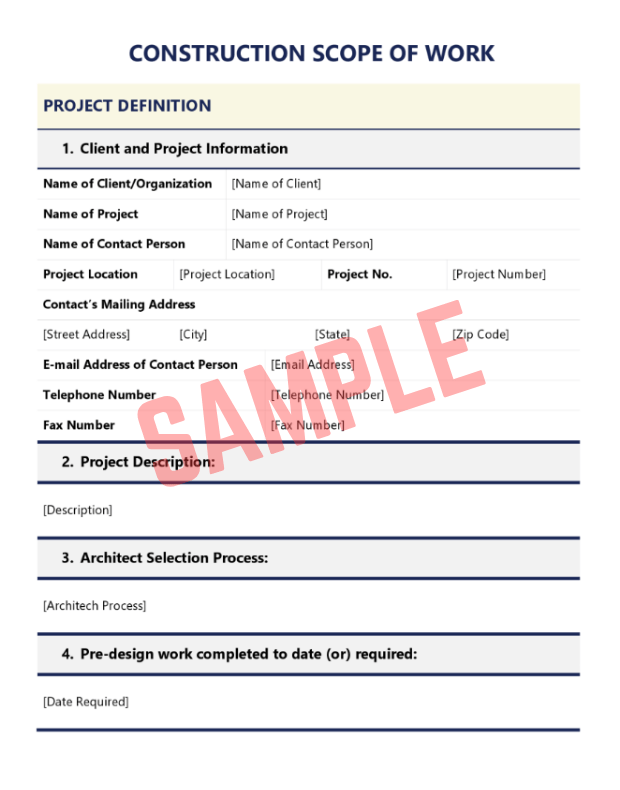
A robust civil engineering scope of work template provides a structured framework that can be adapted for various project types. The following outlines key sections and their typical content, offering a practical guide for creating your own project documentation. This format helps ensure that no critical detail is overlooked.
Section 1: Project Overview and Background
This section sets the stage by providing a brief introduction to the project. It includes the project name, location, and a concise summary of its purpose and goals. The background context helps all stakeholders quickly grasp the project’s essence.
- Project Title: [E.g., Highway 51 Bridge Rehabilitation Project]
- Project Location: [E.g., City of Springfield, County of Evergreen]
- Client Name: [E.g., Springfield Department of Transportation]
- Project Description: A brief narrative summarizing the project’s scope and objectives. For example, “This project involves the comprehensive rehabilitation of the existing steel truss bridge over the Evergreen River, including structural repairs, deck replacement, and approach road improvements, to extend its service life and ensure public safety.”
- Problem Statement/Need: [E.g., Deterioration of existing bridge infrastructure impacting traffic safety and flow.]
Section 2: Scope of Services / Engineering Deliverables
This core section details the specific services the civil engineering firm will provide. It breaks down the work into logical phases and lists all expected outputs for each stage. This ensures a clear understanding of what will be delivered.
- Phase 1: Project Planning and Feasibility Study
- Review of existing data, surveys, and reports.
- Site investigation and reconnaissance.
- Analysis of existing conditions, traffic data, and environmental factors.
- Development of conceptual design alternatives.
- Cost-benefit analysis for proposed options.
- Preparation of a comprehensive Feasibility Report, including recommendations.
- Phase 2: Preliminary Design (30-60% Design)
- Development of preliminary engineering drawings (site plans, profiles, typical sections).
- Hydraulic and hydrologic analysis for drainage systems.
- Geotechnical investigations and recommendations.
- Preliminary structural analysis and design.
- Preliminary cost estimates and project schedule.
- Submission of Preliminary Design Report for client review and approval.
- Phase 3: Final Design and Construction Documents (90-100% Design)
- Preparation of detailed engineering plans, specifications, and estimates (PS&E) suitable for bidding.
- Final structural, roadway, drainage, and utility designs.
- Permit acquisition support (e.g., environmental, regulatory, right-of-way).
- Development of erosion and sediment control plans.
- Finalization of bidding documents.
- Submission of Final Design Package.
- Phase 4: Construction Support Services (Optional)
- Review of contractor submittals (shop drawings, material data).
- Response to Requests for Information (RFIs) during construction.
- Periodic site visits for observation of construction progress and quality.
- Assistance with change orders and unforeseen field conditions.
- Preparation of record drawings (as-builts) based on contractor markups.
Section 3: Exclusions from Scope
It is crucial to explicitly state what is NOT included in the project scope to manage expectations and prevent scope creep. This helps avoid future disputes. Clearly defining these boundaries is a key function of any effective civil engineering scope of work template.
- Specific Exclusions:
- Detailed land surveying beyond what is necessary for design.
- Legal services, property acquisition, or negotiation.
- Hazardous materials assessment or remediation.
- Third-party utility relocation design.
- Funding applications or grant writing services.
- Long-term maintenance planning post-construction.
Section 4: Project Schedule and Key Milestones
This section provides a timeline for the project, indicating key dates and deliverables. It outlines the expected duration for each phase and important checkpoints. Effective scheduling is vital for project success and is a critical part of a robust civil engineering scope of work template.
- Project Start Date: [E.g., January 15, 2024]
- Feasibility Report Submission: [E.g., March 15, 2024]
- Preliminary Design Submission: [E.g., June 30, 2024]
- Final Design Package Submission: [E.g., November 15, 2024]
- Estimated Construction Start: [E.g., Spring 2025]
- Estimated Construction Completion: [E.g., Fall 2026]
Section 5: Client Responsibilities
For the project to proceed smoothly, the client also has specific obligations. Listing these ensures clarity regarding their role and required inputs. This fosters a collaborative environment and clarifies expectations from all parties.
- Client Will Provide:
- Timely access to project site and existing documentation.
- Prompt review and approval of submitted deliverables.
- Designation of a single point of contact for project communications.
- Necessary permits, unless specified as part of engineer’s scope.
- Funding for agreed-upon services as per contract.
Section 6: Assumptions and Constraints
Any underlying assumptions or limiting factors that could influence the project should be clearly documented. These might include availability of data, regulatory environment, or site access conditions. Addressing these proactively helps mitigate potential risks.
- Key Assumptions:
- All necessary permits will be obtainable within standard timelines.
- Existing utility information provided by client is accurate.
- Timely feedback and approvals from client and regulatory agencies.
- Constraints:
- Budget limitations of [e.g., $X million].
- Specific environmental regulations impacting design.
- Existing right-of-way boundaries.
Defining the parameters of any civil engineering endeavor is not merely a formality; it is a fundamental requirement for success. A comprehensive civil engineering scope of work template serves as an indispensable tool, establishing clear boundaries, managing stakeholder expectations, and mitigating risks. It transforms complex project visions into actionable plans, ensuring that every participant understands their role and the desired outcomes.
By consistently utilizing and meticulously detailing a robust scope of work, civil engineering professionals can foster better communication, reduce costly misunderstandings, and enhance overall project efficiency. Embracing this structured approach will undoubtedly lead to smoother project execution and a higher likelihood of achieving project goals on time and within budget. Start streamlining your project planning today by implementing a detailed scope of work for all your upcoming civil engineering projects.